
Just Because You Can Doesn’t Mean You Should
What 20 years in brand marketing taught me about the AI questions everyone is asking
A recent Fast Company piece put words to something I've been pondering the better part of the past year and a half. What is AI’s place in creativity? Will it end up being a accelerant or a full-on replacement? Should I fear AI or embrace it?
I've spent 20+ years in brand marketing and creative leadership, across video production, motion graphics, social media, design, email automation, and strategy. The tools have always evolved:
Quark ——> Adobe InDesign
AVID non-linear editing —→ Adobe Premiere.
Page Maker —→MS Word
Hand animation —→ Adobe After Effects
Manual Social Media posting —→ Hootsuite
Manual Email sending —→ Mail Chimp
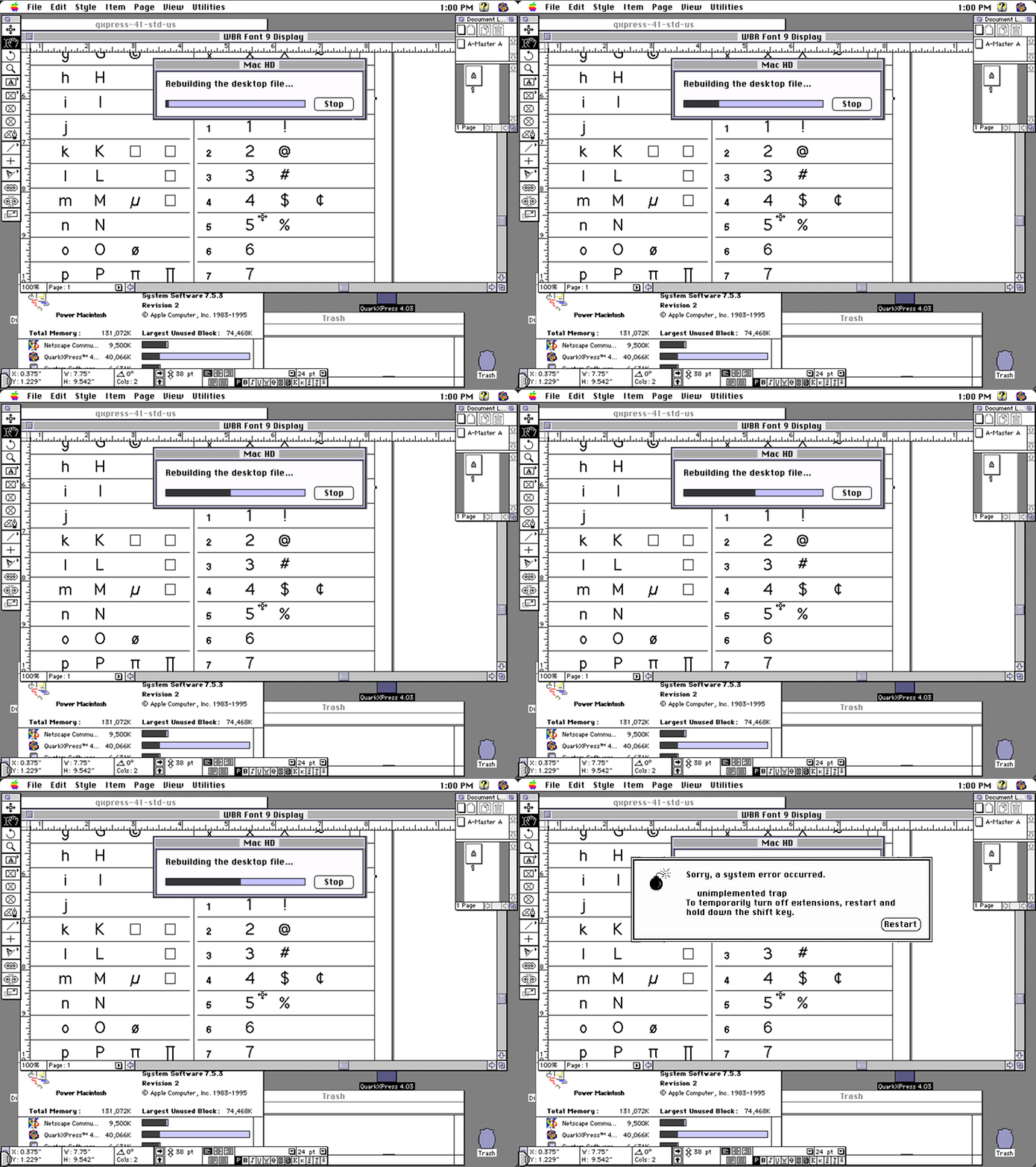
Quark. Running on a Macintosh. Circa 2000. Source: AllAboutKen.com
Each one changed how fast we worked. Each one caused fear in the job market. None of them ended up changing what good work actually required. Will AI be the same story?
What AI Actually Does Well in Brand Marketing
I’m not sure if I should be ashamed to admit that I use it almost every day. My greatest weakness is writing. I used to sit for 2 hours and struggle to draft the first paragraph of a blog. Now after a few minutes of prompts, AI can get me off and running efficiently. It has significantly sped up processes and actually given me confidence.
When I was Marketing Manager at Mural Health, I was managing HubSpot workflows, social content, video tproduction, analytics, and strategy all at once. A tool that compresses a two-hour task into 20 minutes was not a threat to my job. It's was a gift.
AI is legitimately great at:
Generating first drafts based on my ideas
Fact checking
Summarizing research
Handling repeatable, templated content
Providing technical guidance in software platforms like HubSpot, Salesforce, GA4 and the Adobe Creative Suite
But here's the catch. None of that is the idea. It's the acceleration of the execution of the idea.
Where AI Falls Flat in brand marketing
There's a real risk that creative teams get so excited about what AI can do that they stop asking whether they should use it.
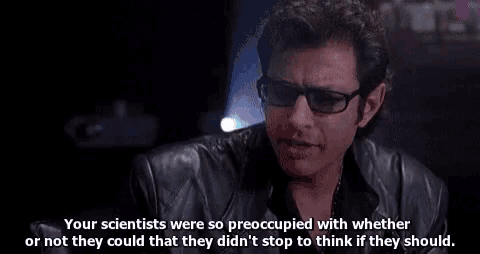
Dr. Ian Malcom said it best in the only good Jurassic Park movie: “Your Scientists were so preoccupied with whether or not they could that they didn’t stop to think if they should.”
Consumers are already getting sharper at detecting what feels authentic versus what feels generated. A polished, AI-produced campaign that has no consistent point of view is worse than an inconsistent human one that does.
At Evolve IP, I was building brand systems from scratch with as a creative department of one with tight timelines. The challenge was never having enough tools - I had the full Adobe Creative Suite, a Getty Images Subscription, video equipment, agencies to outsource to when needed, 15 Unicorn Masks - it was knowing which ones to use, when, and why.
That judgment didn't come from software. It came from experience, instinct, and knowing the brand I helped build well enough to have a real opinion about it.
Big Ideas come from experience, not prompts
Our most successful campaign at Evolve IP was a collaboration with Villanova men’s basketball coach Jay Wright just after winning his first national championship. AI did not have the personal relationship with Coach Wright that our CEO had. AI couldn’t call in a favor. AI didn’t conceive or execute a visit to a basketball practice (that ended up including 3 eventual NBA stars: Jalen Brunson, Josh Hart and Donte DiVincenzo) for our hottest sales prospects. Or the post-practice steak dinner with the coaches and players.
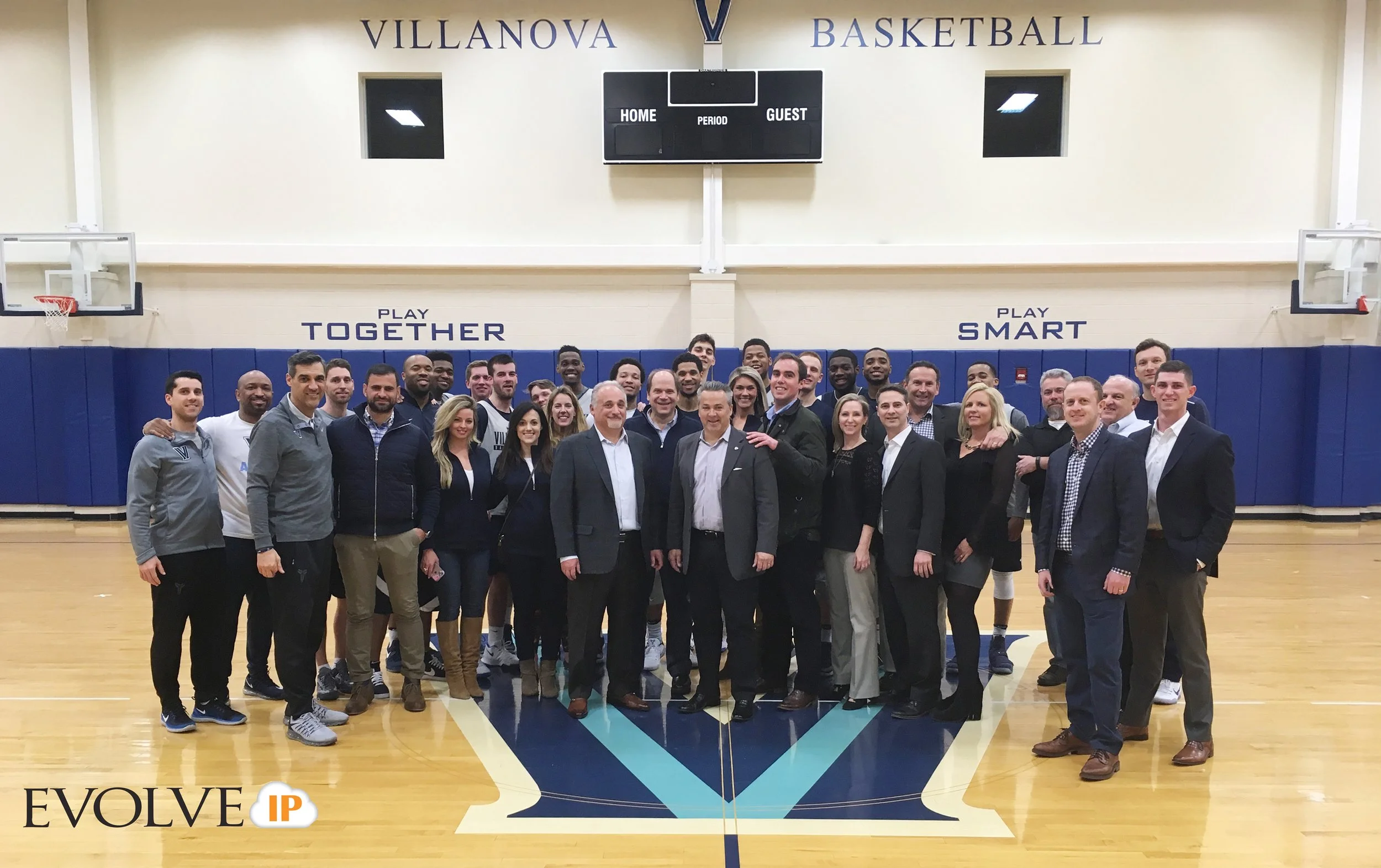
See if you can spot future NBA All Stars Jalen Brunson, Josh Hart and Donte DiVincenzo
This is a perfect example of a the gap that AI can't close. And it's exactly what you hire senior marketing leaders like myself for.
THE FUTURE OF AI IN MARKETING AND CREATIVE
Half Empty: We do run the very real risk of companies simply deemphasizing the need for creativity, outside the box thinking and ideas in marketing. This entire chain of television stations just eliminated creative services. I firmly believe there will be a backlash to this method sooner than you think.
And the loudest voices in AI (those who have a vested financial interest in it’s long-term success) seem to be painting a picture of total societal transformation with a negative outcome for millions of employed workers.
Half Full: I'm genuinely excited about what AI unlocks for the millions of people like me who just need a little brainstorming or a workflow Red Bull. In video editing alone, it has saved hours of scrubbing through long webinars searching for zingers and sharable content.
My Glass: I believe the leaders who will come out ahead aren't the ones who automate every last thing. They're the ones who know which 20% of their work should stay human, and protect it. The brand voice. The industry specific creative. The instinct about what a campaign should feel like before a single asset is made. And most importantly, the big ideas.
That's the part I'm leaning into. Two decades of brand strategy, creative direction, and marketing leadership, accelerated by the best tools available, but never replaced by them.
